AI and robotics advance coral conservation

  • Maldives, Fulhadhoo Island
  • Assisted reproduction
  • Capacity building
  • Coral restoration

Credits: Maahil Ahmed
Facing a challenge

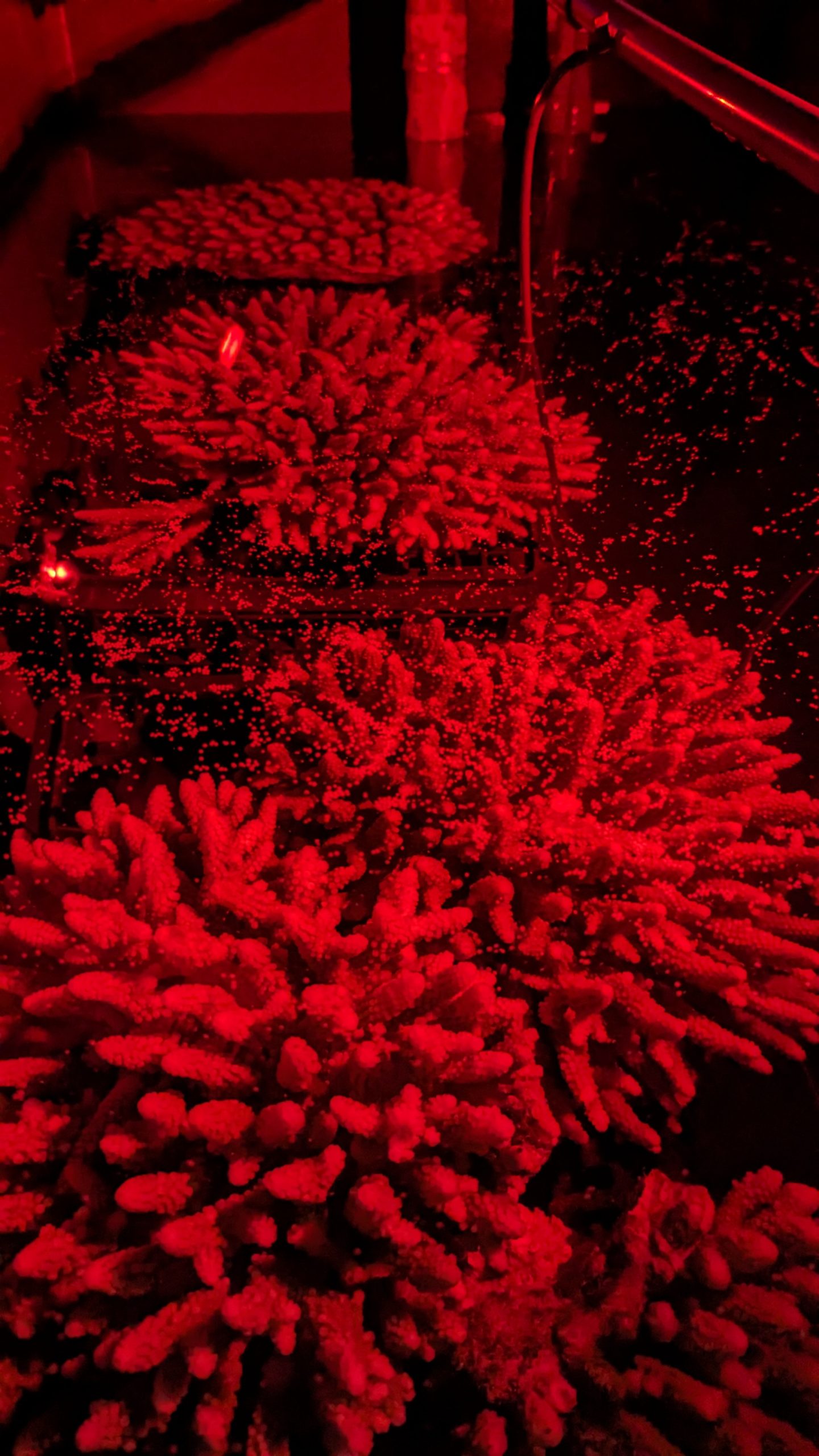
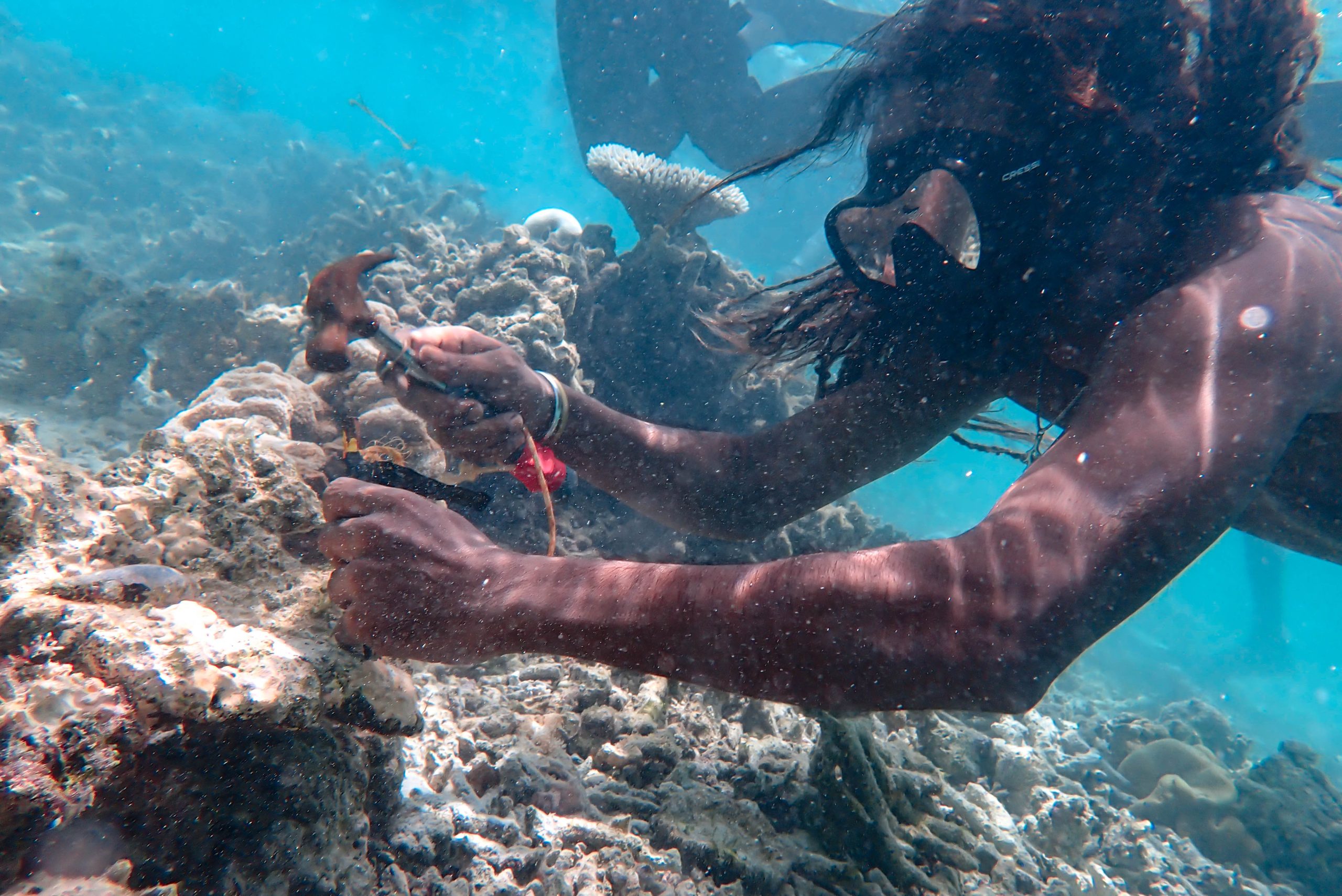
Healthy coral reef ecosystems depend not only on adult corals but also on the arrival and successful settlement of new individuals. As reef-building coral populations decline, the natural supply of larvae and their settlement rates also decrease, reducing coral cover and overall ecosystem resilience. In the Maldives, previous restoration efforts have mainly been led by NGOs and resorts using approaches that do not prioritize genetic diversity — an essential factor for long-term resilience and survival.
CHALLENGE_creditsMaahilAhmed

Credits: Maahil Ahmed

With an innovative solution

This project aims to improve coral restoration in the Maldives by applying methods that promote genetic diversity. The goal is to increase the efficiency of coral spawn collection, mass larval production, settlement, and survival. To achieve this, the team will:
  • Identify suitable source and restoration sites across four Maldivian atolls, based on bleaching responses, genetic diversity, and oceanographic models
  • Monitor coral spawning at key reef sites, optimise spawn collection, and produce large numbers of genetically diverse larvae in culture systems to improve survival
  • Use a remote-controlled submersible robot (LarvalBot) to deliver larvae to targeted reef areas and track their growth and survival
  • Develop and apply a locally co-designed decision-making framework to select optimal sites for spawn collection
  • Tailor an artificial intelligence system to the needs of Maldivian stakeholders, enabling the collection of high-resolution spatial data
  • Build local capacity by engaging stakeholders in long-term collaboration, co-designing annual research plans, and developing training materials
SOLUTION_creditsMaahilAhmed

Credits: Maahil Ahmed

What impact looks like

  • A replicable model for optimised larval restoration that can be applied in other regions
  • Establishment of a national coral restoration network in the Maldives to support long-term recovery efforts
  • Restoration of coral populations across selected reef sites in the Maldives
  • Local communities and stakeholders are empowered through capacity building
  • Gender equality approaches lead to more inclusive restoration efforts

Project Title

Empowering Community-Led Coral Reef Restoration and Prioritization in the Maldives

Lead

Prof. Peter Harrison

Co-leads

Aya Naseem, Hana Amir, Nizam Ibrahim, Dr. Christopher Doropoulos, Prof. Cynthia Riginos, Prof. Mark Gibbs, Prof. Matthew Dunbabin

Countries involved

Maldives and Australia

Takes place

Maldives

Supporting institutions

Southern Cross University, Maldives Coral Institute, Ministry of Fisheries, Marine Resources and Agriculture, Rathafandhoo Council – South Huvadhu Atoll, Commonwealth Scientific and Industrial Research Organisation, University of Queensland, Australian Institute of Marine Science (AIMS), Queensland University of Technology

Total budget

USD 1,499,988

Duration

January 2024 – January 2027

    • Trained 27 representatives from 16 organisations across five regions
    • Established a nationwide coral restoration network involving 36 stakeholders from 18 organisations across four atolls
    • Delivered hands-on training in coral spawning, larval culture, restoration techniques, and the use of larval rearing system
    • Cultured and released more than 200,000 coral larvae, with over 3,000 recruits now growing on reef substrate
    • Developed a thermal stress mapping tool to identify suitable restoration sites
    • Developed a hydrodynamic model to identify priority reefs for restoration
    • Reared more than 4 million coral larvae
    • Released over 2.2 million coral larvae onto degraded reefs in Fulhadhoo
  1. 2026

Share this project

Email
X
Facebook
LinkedIn
WhatsApp