Mapping how coral reefs are connected

  • Thailand
  • Capacity building
  • Coral restoration

Credits: ATMEC

Facing a challenge

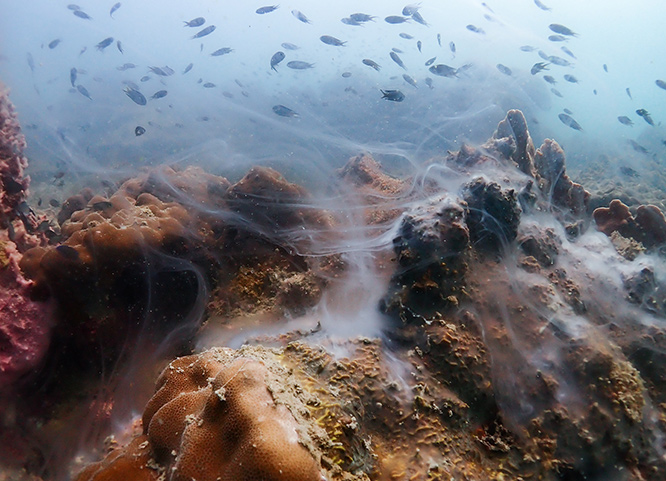
Coral restoration approaches in Southeast Asia remain site-specific, focusing on local coral propagation and transplantation while overlooking the ecological connectivity between reefs. While great investments in reef monitoring and infrastructure have advanced the understanding of coral connectivity in other parts of the globe, scientists still do not fully understand how reefs are connected over large distances in the Gulf of Thailand.
PB200135_CLIP_2025

With an innovative solution

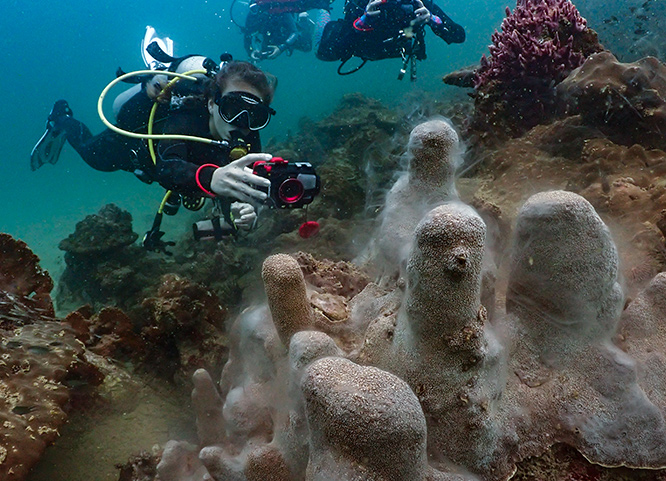
The project will identify how reefs in the Gulf of Thailand are connected and which sites rely on others for their coral recruits. To achieve this, the team will:
  • deploy satellite drifters during coral spawning events
  • compile historical hydrographic data and collect new information
  • develop high-resolution, three-dimensional hydrodynamic and coral larval dispersal models to map how coral larvae travel between reefs during spawning events
  • monitor coral recruitment on coral sanctuary sites
  • identify reef sites acting as coral larvae donors or receptors
SOLUTION_credits_ATMEC_CLIP_2025

Credits: ATMEC

What impact looks like

  • Future conservation strategies in the Gulf of Thailand and Southeast Asia are backed up by scientific information
  • Improved baseline data on coral larval dispersal and coral recruitment in the region
  • Clear understanding of coral connectivity in the region, including which sites act as donors or receptors of coral larvae
  • Conservation strategies integrate genetic diversity and reef connectivity into long-term management and policy planning
  • Understanding of the transport of pollutants, marine debris, nutrients, and sediments, which affect reef health
  • Evidence-based management tools and tailored policy recommendations, fostering coordination among stakeholders toward a connected, regionally informed approach to coral reef conservation
  • Enables local governments to better monitor reef-impacting factors such as sedimentation, plastic pollution, and ghost fishing gear

Project Title

Mapping Connectivity of Coral Reefs in the Gulf of Thailand

Lead

Dr. Rahul Mehrotra

Co-leads

Prof. Tanuspong POKAVANICH, Wan Chantavilasvong, Prof. Mathinee Yucharoen, Dr. Lalita Putchim

Countries involved

Thailand

Takes place

Thailand

Supporting institutions

Aow Thai Marine Ecology Center, Love Wildlife Foundation, Kasetsart University, Nature and City Scape Analytics (NACSA), Prince of Songkla University, The Department of Marine and Coastal Resources

Total budget

USD 18,241

Duration

January 2026 – January 2028

  1. 2026
  2. 2027
  3. 2028

Share this project

Email
X
Facebook
LinkedIn
WhatsApp