Monitoring heat-tolerant algae living inside corals

  • Fiji
  • Guam
  • Capacity building
  • Climate adaptation and resilience

Credits: Keneth Hoadley
Facing a challenge

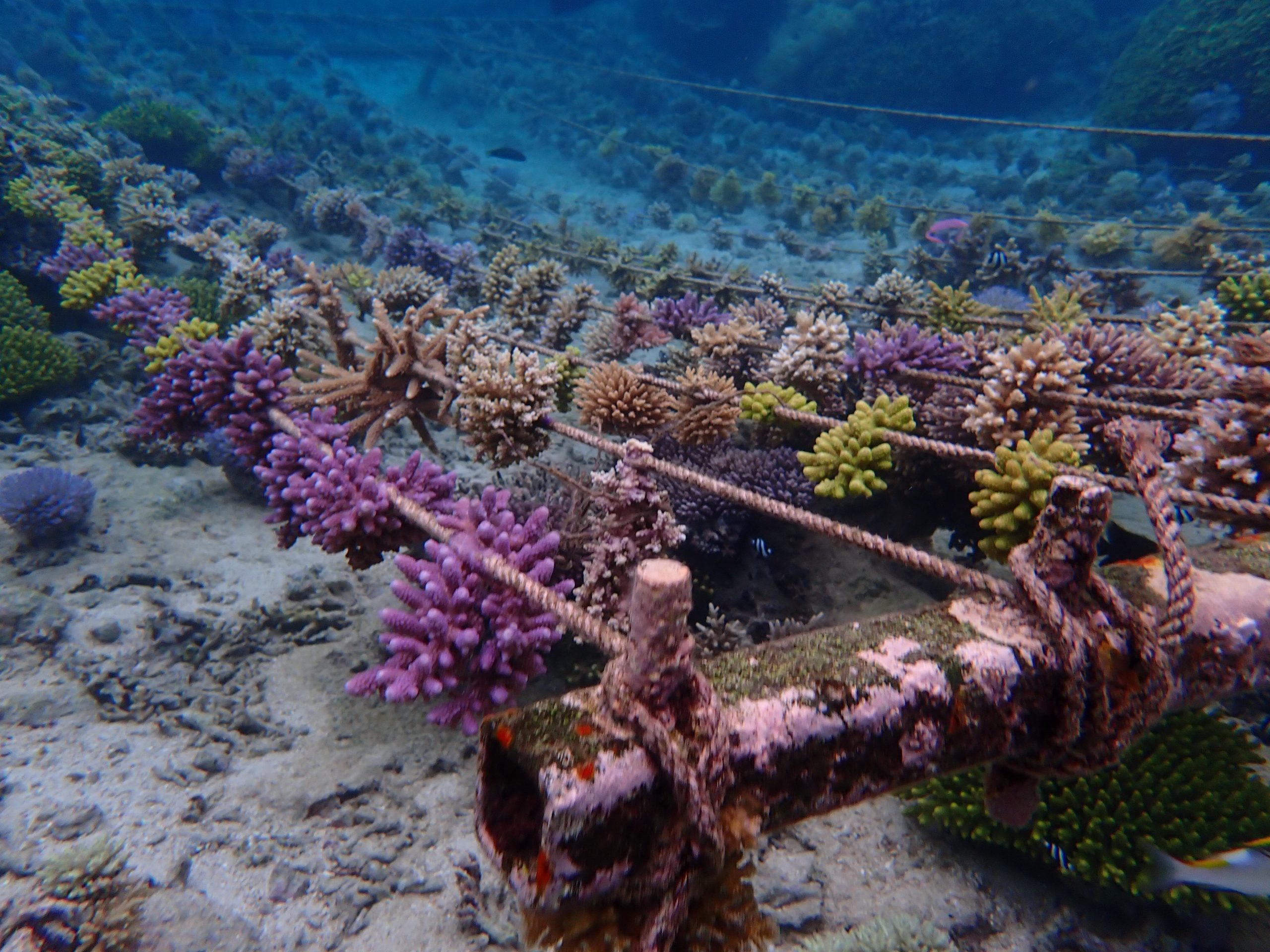
Coral reef restoration plays a key role in helping marine ecosystems cope with climate change by addressing coral degradation. Integrating thermally tolerant corals into restoration programmes is essential for long-term success. However, identifying and selecting heat-tolerant coral colonies typically requires specialized infrastructure and scientific expertise, making it difficult for many conservation programmes to implement.
CHALLENGE_creditsKenethHoadley

Credits: Keneth Hoadley

With an innovative solution

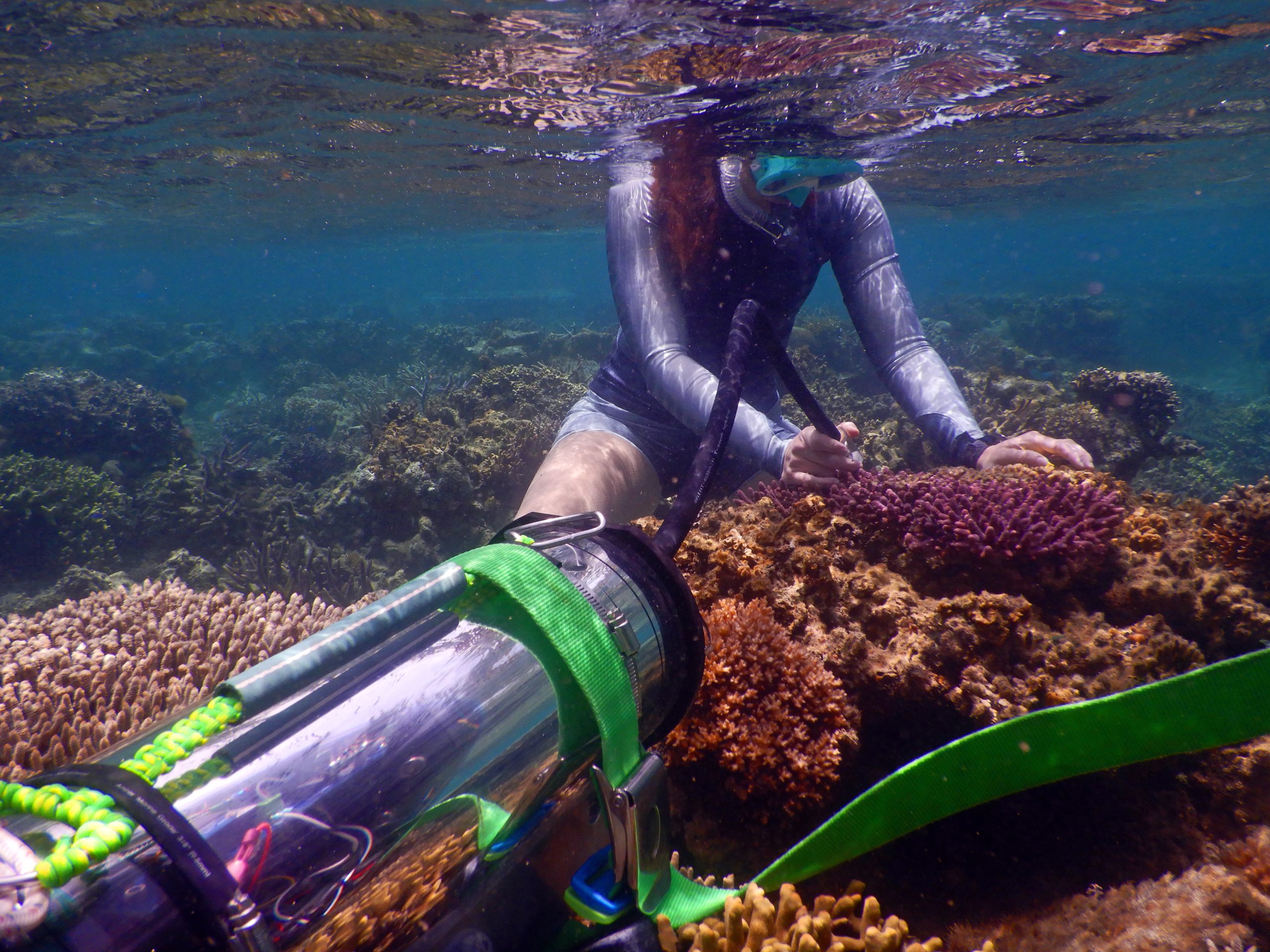
This project focuses on assessing coral heat tolerance to identify colonies that are more or less likely to bleach. To achieve this, the team will:
  • conduct thermal stress experiments with four key coral genera in Fiji and Guam
  • use a submersible handheld fluorometer to monitor the fluorescence of algae living inside corals to assess their heat tolerance, helping identify coral colonies that are more likely to bleach
  • develop bleaching tolerance models based on field data
  • conduct training sessions and coral transplant experiments with partners in Fiji and Guam
  • validate model accuracy through field-based transplant experiments across five reef systems, comparing the outplanted predicted heat-tolerant and heat-sensitive corals and tracking their health, growth, and bleaching responses
  • refine and disseminate the tool based on user feedback, including organizing a workshop in Fiji to introduce the approach to a wider restoration community, including the Ministry of Fisheries
SOLUTION_creditsKenethHoadley

Credits: Keneth Hoadley

What impact looks like

  • Strengthening coral restoration by enabling the selection of heat-tolerant corals, supporting long-term ecosystem health and coastal livelihoods
  • In Fiji, integration of the technology into community-based marine conservation and resource management, benefiting tourism and fisheries-dependent communities
  • In Guam, enhancement of restoration initiatives through stronger collaboration between scientists and reef managers
  • Stronger partnerships with NGOs, government agencies, and local communities to deploy and scale this tool across coral restoration sites
  • Development of predictive bleaching tolerance models tailored to regional reef systems, with potential for wider global application 
  • Coral restoration practitioners are trained in the use of the submersible fluorometer

Project Title

Novel bio-optical tools for scaling up coral restoration practices in cooperatively managed reef systems in the Pacific

Lead

Dr. Kenneth Hoadley

Co-leads

Dr. Bastian Bentlage, Dr. Laurie Raymundo, Dr. Mark Warner, Victor Bonito

Countries involved

United States of America and Fiji

Takes place

Fiji and Guam

Supporting institutions

University of Alabama, University of Guam, University of Delaware, Reef Explorers Fiji

Total budget

USD 1,499,021

Duration

January 2024 – October 2027

    • Outplanted 500 corals across three nurseries
    • Onboarded three students and two post-doc researchers
    • Developed portable bio-optical tools to predict coral bleaching
    • Tested models in Guam and Fiji, achieving approximately 90% accuracy
    • Improved instrumentation for scalable use by restoration practitioners
  1. 2026
  2. 2027

Share this project

Email
X
Facebook
LinkedIn
WhatsApp