Restoration Road Maps: Scaling up coral rescue in the Caribbean

  • Caribbean Sea
  • Capacity building
  • Coral restoration

Credits: Patricia Kramer
Facing a challenge

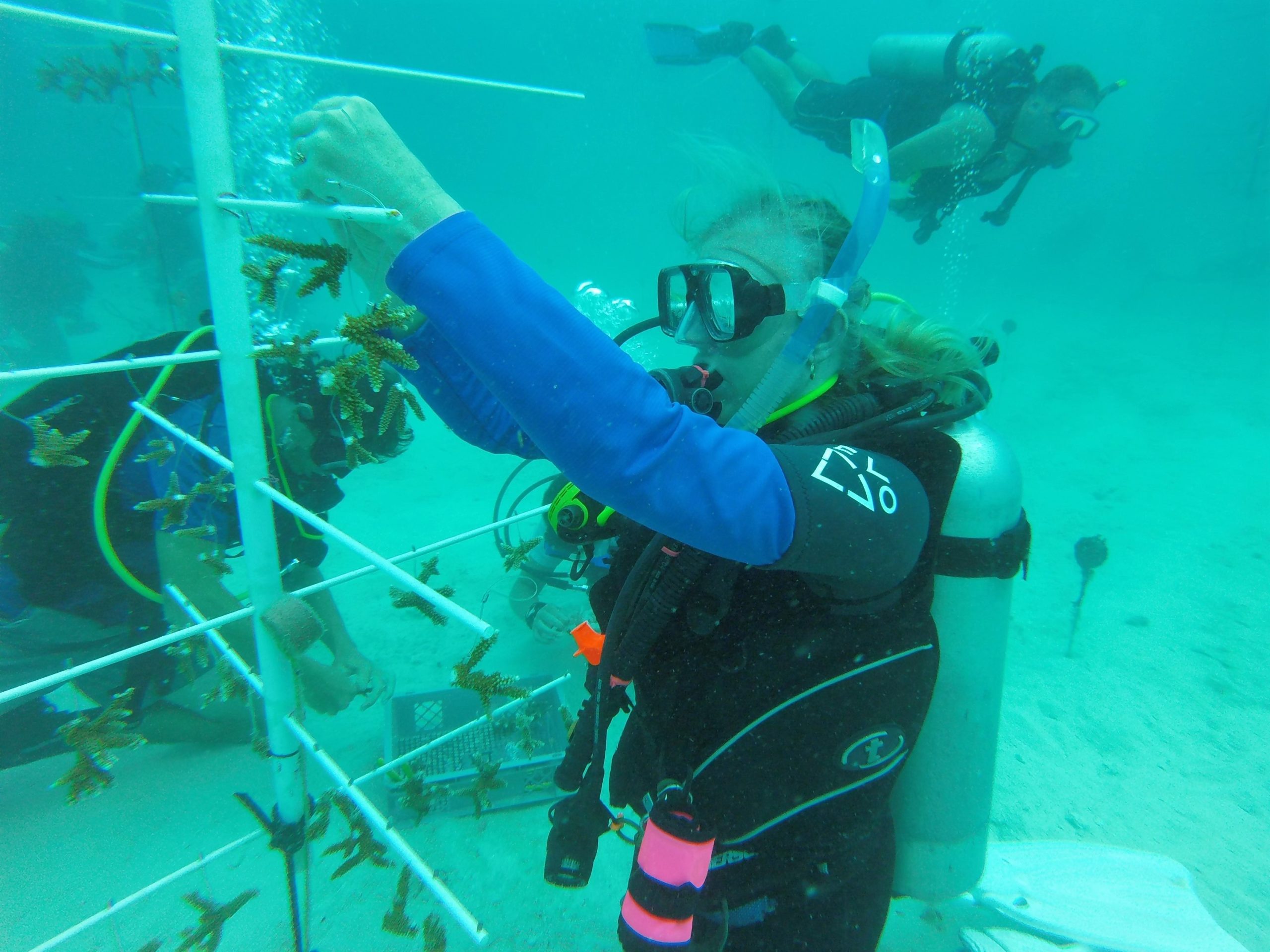
Coral reefs in the Caribbean are critically endangered due to climate change, pollution, and the spread of diseases. While several restoration projects are already underway in the region, there is an urgent need to scale up these efforts across marine protected areas (MPAs) and involve a wider range of stakeholders to prevent corals from becoming functionally extinct. In particular, severe outbreaks of Stony Coral Tissue Loss Disease (SCTLD) and increasing coral bleaching events make it essential to expand coral rescue efforts across the region.
CHALLENGE_creditsPatriciaKramer

Credits: Patricia Kramer

With an innovative solution

To reverse coral reef decline in the Caribbean this project aims to foster collaboration among scientists, resource managers and communities. The team will:
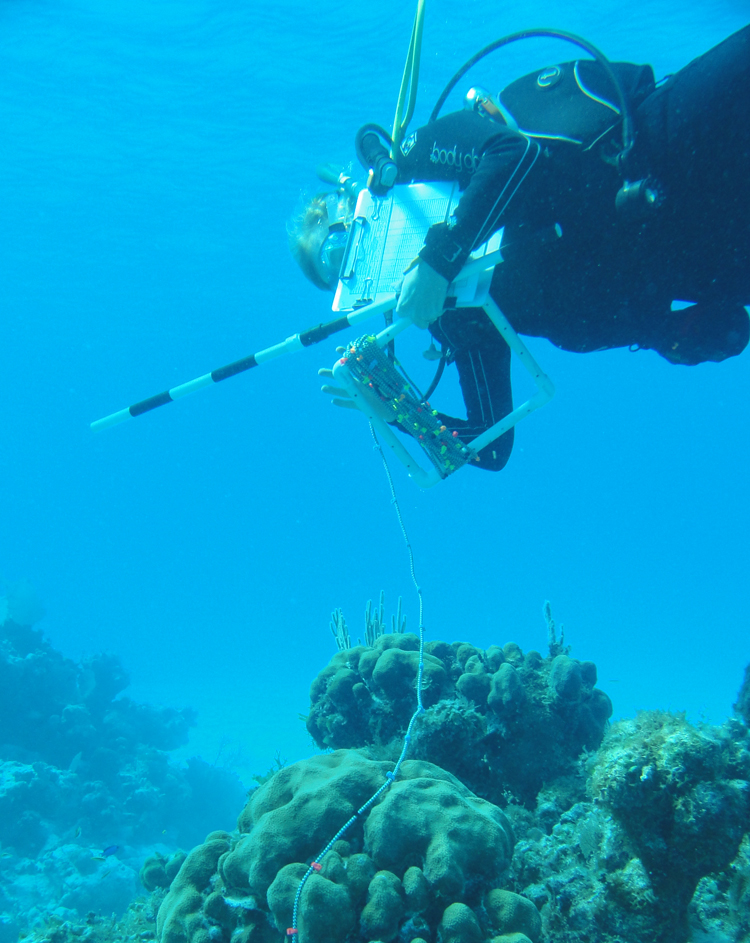
  • identify and characterise restoration sites in the Caribbean based on their biological and ecological condition, MPA governance, and socio-economic condition
  • develop a database on coral spawning
  • identify and implement coral restoration at four to five MPA sites in the Caribbean and evaluate outcomes using the Restoration Roadmap Evaluation Tool
  • promote multiple online and in-person capacity-development and knowledge sharing opportunities on topics such as coral reef monitoring, photomosaic mapping, coral spawning and larval propagation, and coral fragmentation and herbivore management
  • develop restoration strategies for coral species threatened by SCTLD, with a focus on highly susceptible and endemic species at risk of genetic loss and functional extinction 
  • develop the Restoration Road Maps and the Restoration Roadmap Evaluation Tool 
  • strengthening the capacity of MPA managers to design and implement effective restoration initiatives targeting high-risk coral species
DCIM114GOPRO

Credits: Patricia Kramer

What impact looks like

  • Development of practical strategies to restore coral species threatened by SCTLD, alongside strengthened capacity among MPA managers across the Caribbean
  • Contribution to more effective and sustainable reef restoration efforts across the region
  • Strengthening of a regional network with representatives from more than 40 MPAs across 18 Caribbean countries
  • Development of Restoration Road Maps tailored for MPA managers
  • Implementation of coral restoration at four to five demonstration sites
  • Capacity building for 25–35+ MPA managers and regional stakeholders

Project Title

Restoration Road Maps: Improving coral restoration and capacity of managers in the Caribbean and MPAConnect Network

Lead

Dr. Patricia Kramer

Co-leads

Simon Walsh, Alizee Zimmermann, Dr. Stacey Williams, Lynnette Roth, Dr. Elvira Alvarado, Dr. Arthur Gleason, Dr. Michelle Dennis, Emma Doyle, Gabriela Ochoa, Dr. Judith Lang, Dr. Anastazia Banaszak

Countries involved

United States of America, Dominica, United Kingdom, Puerto Rico, Honduras, Mexico, Australia, and Colombia

Takes place

Caribbean Region

Supporting institutions

Ocean Research and Education Foundation (AGRRA), Dominica Local Area Management Authority, Turks & Caicos Reef Fund, Institute for Socio-Ecological Research (ISER), ECOMARES Foundation, University of Miami, University of Tennessee, MPAConnect/Gulf and Caribbean Fisheries Institute, Roatan Marine Park, National Autonomous University of Mexico

Total budget

USD 970,200.00

Duration

January 2024 – January 2027

    • Hosted a webinar bringing together all CORDAP-funded Caribbean projects
    • Convened 30 marine resource managers and restoration practitioners from 16 countries
    • Organised five workshops and training courses, reaching over 200 participants
    • Developed a Caribbean Coral Spawning Database, compiling over 2,400 records from 10 countries
    • Trained more than 60 practitioners in reef monitoring and restoration planning
    • Supported the expansion of land-based coral rescue facilities in five Caribbean nations
  1. 2026

Share this project

Email
X
Facebook
LinkedIn
WhatsApp