
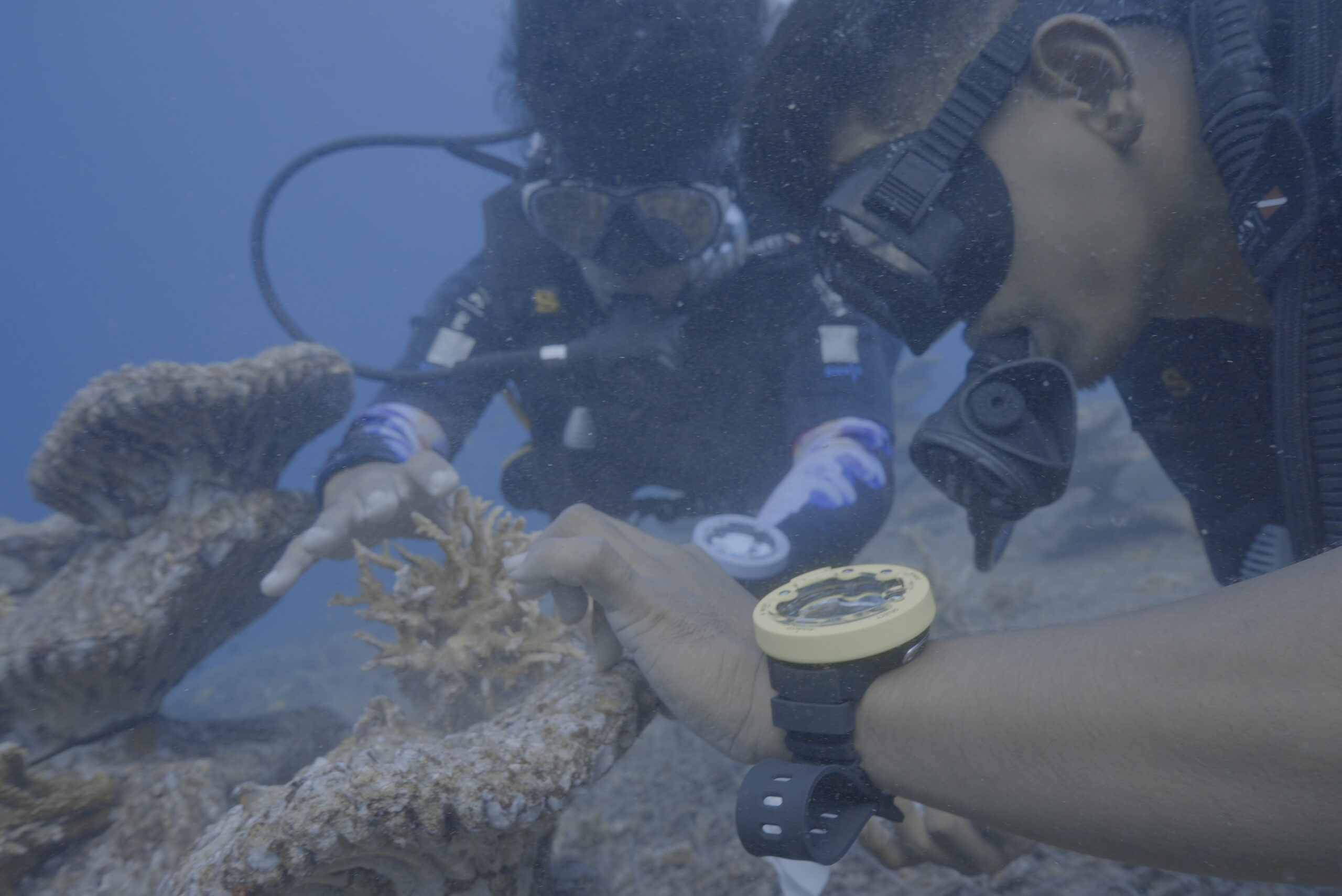
Researchers can apply for up to USD 1 million to save corals through CORDAP’s 2026 Coral Accelerator Program
CORDAP announces its annual funding call seeking breakthrough solutions to protect and restore coral reefs
The G20 Coral Research and Development Accelerator Platform (CORDAP) has launched its annual Coral Accelerator Program (CAP) funding call, offering grants up to USD 1 million per project for innovative solutions that protect, restore and strengthen the resilience of coral reefs worldwide. The deadline for submission of Concept Notes is 19 October 2026, and funded projects are expected to commence in late 2027.
The urgency of action
From early 2023 to mid-2025, bleaching-level heat stress impacted 84% of the world’s coral reef area in all three coral reef-containing basins: the Pacific, Atlantic, and Indian Oceans. Across the globe, reefs experienced unprecedented bleaching, threatening not only marine biodiversity but also the livelihoods, food security and cultural heritage of millions of people who depend on them.
Only one year after the end of the fourth global coral bleaching event, another El Niño has been confirmed, with a greater than 90% chance of turning into a very strong event that is anticipated as “the largest El Niño in living memory and what is probably the largest such event since the 19th century”, states the Met Office. Historical records show that strong El Niño events are closely associated with widespread coral bleaching, increasing concern that coral reefs could face another major bleaching event before fully recovering from recent impacts.
Accelerating scientific and technological innovation has never been more critical to improving the resilience and recovery of coral reefs and the communities that rely on them.
The Coral Accelerator Program (CAP) 2026
The Coral Accelerator Program, now in its 5th edition, has supported more than 1,000 researchers across the globe since 2022 through funding for 29 collaborative projects, from the development of probiotics in the Caribbean, to building fertility clinics for corals in the Coral Triangle. This program is guided by three core principles:
- Ensuring local community benefits: Solutions must be affordable and accessible to those most in need.
- Global inclusivity: Applicant teams must include organizations from at least two countries, one of which must be a low or middle-income country.
- Open-source solutions: Intellectual property resulting from CORDAP-funded activities will be made available free under a public license for all commercial and non-commercial coral conservation use, enabling broader access and innovation.
![Coral bleaching on the Great Barrier Reef, 2017 [Credit: The Ocean Agency / Ocean Image Bank]](https://cordap.org/wp-content/uploads/FKt251206-20251229-DanielLaurettaMainLab-VallejoPrut-7862__-scaled.jpg "FKt251206-20251229-DanielLaurettaMainLab-VallejoPrut-7862__")
Dr. Daniel Lauretta handles a biological samples retreived from the deep-sea during an expedition. Credit: Misha Vallejo Prut /Schmidt Ocean Institute
What’s new in 2026
While global climate change remains the primary threat to coral reefs, local pressures also play a critical role in determining reef health and resilience. This year’s call brings an additional research priority area: the interaction between water quality and corals. With more than 30% of coral reefs worldwide threatened by declining water quality linked to land-based activities, researchers are encouraged to develop innovative approaches to improve water quality and enhance overall reef health.
Before the end of 2026, CORDAP will launch an additional funding call focused on high-risk, high-reward ideas from innovators beyond the traditional coral reef research community. Breakthroughs in fields such as engineering, biotechnology, medicine, agriculture, materials science, robotics, artificial intelligence, manufacturing, energy and data science may offer transformative solutions that have not yet been fully explored for coral reef conservation. The maximum cost per proposal allowed under this program is USD 600,000. The total funding amount for both CAP 2026 and the new high-risk, high-reward calls is USD 3.2 million.
Carlos Duarte, Executive Director of CORDAP and Distinguished Professor at King Abdullah University of Science and Technology (KAUST), emphasized the critical nature of this work:
“The science needed to help coral reefs survive and recover is advancing faster than ever before. The challenge now is to accelerate the journey from discovery to deployment. Through the Coral Accelerator Program, CORDAP is investing in bold international research partnerships that can turn promising ideas into practical solutions for reefs and the millions of people who depend on them. Every year matters, and every breakthrough brings us closer to a future where coral reefs can continue to thrive.”
CAP 2026 will support projects with the potential to significantly advance science and technology in several high-priority coral research areas, including coral aquaculture, cold-water corals, methods to preserve and conserve existing corals, strategies to enhance coral early-life survival, as well as approaches that contribute to research and development capacity building, among other topics.
Applications for CAP 2026 are now open. Concept Notes must be submitted by 19 October 2026. For more information about CAP 2026, including eligibility requirements, proposal guidelines and details of the applicant Q&A webinar, visit https://cordap.org/awards/.
Notes to Editors
About CORDAP
The G20 Coral Research & Development Accelerator Platform – CORDAP – was launched in 2020 by the G20 to fast-track research and development (R&D) solutions to save the world’s corals. CORDAP brings together the best minds worldwide, in a transdisciplinary approach, to accelerate international research and development to supply the technologies and innovations required to secure a future for corals and reefs.
Contact
Carla Lourenço, Communications and PR Lead
Email: carla.lourenco@kaust.edu.sa
Website: www.cordap.org
Instagram: @CORDAP_
Linked In: G20 CORDAP