
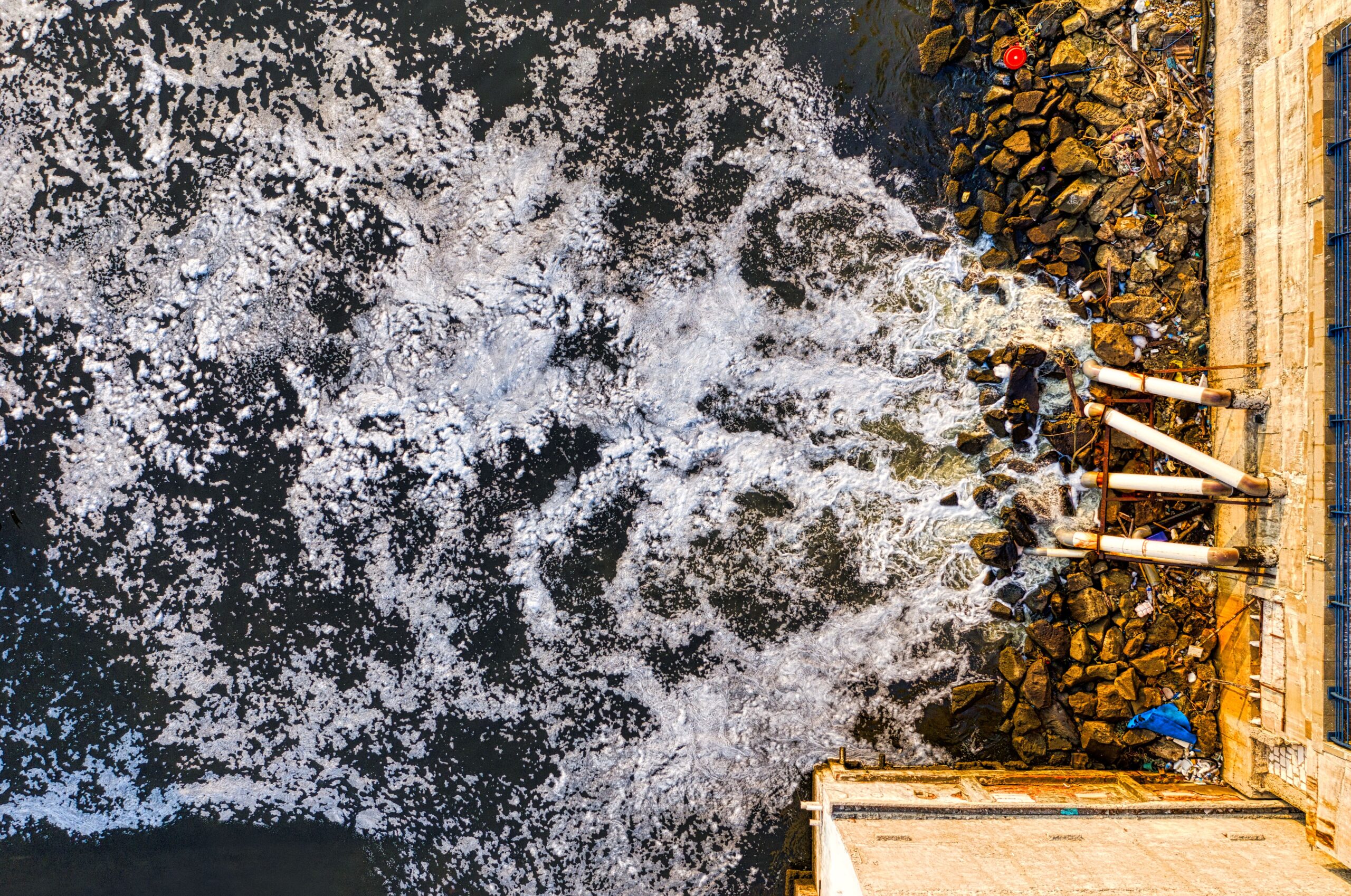
Improving water quality is one of the most actionable local-to-regional interventions available to strengthen coral reef resilience under climate change.
To encourage action, CORDAP together with Centre for Environment Fisheries and Aquaculture Science (CEFAS), the Nutrient Pollution Global Action Network (NP-GAN) and Wildlife Conservation Society (WCS), produced the “Integrated Coastal and Marine Water Quality Roadmap” to identify Research and Development (R&D) priorities for solutions to land-based pollution threatening coral reef ecosystems.
Marine pollution is one of the most daunting environmental challenges of our times, driven by the near-constant supply of harmful substances and pollutants entering waterways and by their far-reaching ecological, societal, and economic consequences. Land-based activities currently threaten over 30% of coral reefs worldwide.
There are close to one billion people living within 100 km of a coral reef across 117 countries. The human interdependence with coral reefs is clear, as is the anthropogenic impact on these ecosystems. While addressing land-based pollution’s environmental and socio-economic pressures is one of the most effective ways to improve outcomes for coral reef ecosystems, doing so will require joint action across technology, communities, governance, and financing.
CORDAP’s recently published Integrated Coastal and Marine Water Quality Roadmap addresses this need by providing a strategic framework for prioritising research and development on water quality solutions that reduce land-based pollution affecting coral reefs and connected coastal habitats.
The roadmap is one of the outputs of a five-day workshop co-organised by CORDAP, CEFAS, NP-GAN, and WCS in October 2025. Together, 27 experts from 13 different countries identified three priority areas for innovation and investment:
- Improved sanitation to reduce domestic wastewater pollution area
- Best practice management of agriculture & integrated land-sea systems
- Effective nature-based solutions (NbS) to improve coral reef water quality
The workshop participants emphasised that addressing pollution at the source, interrupting it along the pathway, and mitigating impacts in the receiving environment all require integrated solutions combining technology, targeted monitoring, decision-support guidance, and community engagement.
Plastics, industrial effluents, port pollution, oil spills, aquaculture waste, and emerging contaminants are excluded from our discussion and acknowledged as critical future research areas.
![Bleached corals in Ningaloo, Western Australia, February 2025 [Credit: Daniel Nicholson / Ocean Image Bank]](https://cordap.org/wp-content/uploads/OceanImageBank_SrikanthMannepuri_03-scaled.jpg "default")
Aerial of Godavari-Krishna mangroves, India. Credit: Srikanth Mannepuri via Ocean Image Bank
Key Pathways for R&D
Priority area 1: Improved sanitation to reduce domestic wastewater pollution area
Sanitation is not just an infrastructure service but a crucial element of public health and environmental protection, essential for reducing pollution loads, preventing disease, and safeguarding downstream ecosystems. Sanitation systems must be adapted to local conditions and supported by guidelines that help governments and utilities select appropriate technologies and maintain safe operation over time.
R&D priorities:
- Mapping and quantifying pollutant loads for coral reef ecosystems
- Evidence-based standards and guidelines for coral reef protection
- Deploying context-appropriate, nutrient-reducing wastewater systems protective of coral and associated ecosystem health.
Priority area 2: Best practice management of agriculture and integrated land-sea systems
Improving how crops, livestock and agroforestry systems are designed and managed can reduce nutrient, sediment, and contaminant losses from landscapes, but limited access to soil and water testing, extension support, and affordable technologies constrains the uptake of best practices. Equally important is ensuring that agricultural improvements are supported by coordinated governance and landscape-level planning. Addressing agricultural pollution effectively requires catchment-to-coast alignment, targeted monitoring, and adaptive strategies that integrate ecological, social, and economic factors to achieve meaningful reductions in sediment, nutrient, and contaminant flows to marine environments.
R&D priorities:
- Understanding the system – Reef exposure pathways and hotspots (agriculture → coast → reefs)
- Reef-protective innovations in farm practice and land management
- Monitoring and evaluation (including new technologies)
- Collaboration, capacity building, and knowledge transfer
Priority area 3: Effective nature-based solutions (NbS) to improve coral reef water quality
Nature-based Solutions (NbS) harness ecological processes to capture, transform, or retain pollutants while simultaneously delivering multiple co-benefits, including carbon sequestration, biodiversity enhancement, shoreline protection, and livelihood opportunities. Their ability
to provide multiple services – pollution reduction, habitat creation, carbon storage, and cultural values – simultaneously offers a higher return on investment when viewed through an integrated environmental and socio-economic lens. Even still, the uptake of NbS remains limited by uncertainties around performance under different scenarios. This knowledge barrier slows
investment, constrains innovation, and makes it difficult for governments and communities to fairly compare NbS with conventional infrastructure improvements.
R&D priorities:
- Demonstrate what works: Reef-protective NbS trials
- Reef thresholds and cumulative impact modelling
- Coastal NbS and co-location to protect priority reefs (blue-green infrastructure)
- Reef-ready monitoring, reporting and verification (MRV) technologies
- Valuation frameworks for reef outcomes
![Coral bleaching on the Great Barrier Reef, 2017 [Credit: The Ocean Agency / Ocean Image Bank]](https://cordap.org/wp-content/uploads/OceanImageBank_ShaunWolfe_45-2.jpg "OceanImageBank_ShaunWolfe_45 (2)")
Coral reefs growing on shallow waters [Credit: The Ocean Agency / Ocean Image Bank]
Broader considerations and conclusions
Local water quality improvement is one of the few actionable interventions available to reduce cumulative stress and improve reef recovery potential under climate change. The stakes are therefore high, and research and implementation cannot be delayed or under-resourced.
Scientific advances will not be enough to make meaningful improvements in coral reef water quality. Reef water quality recovery requires integrated, financed, monitored, locally owned, and adaptive action from catchment to reef. Governance, social, cultural, institutional, and economic conditions are critical elements of the durability of interventions. Investment in capacity building, knowledge sharing, and participatory approaches, including the integration of Indigenous ecological knowledge, is therefore not peripheral to the research agenda but central to it.
Equally important is the development of robust economic valuation frameworks that capture the full costs of inaction and the co-benefits of intervention, including human health, food security, tourism, and climate resilience benefits, so that decision-makers can build a compelling and defensible case for sustained investment in improving and maintaining water quality in coral reef systems.
The priority now is to move from fragmented pilots to coordinated, evidence-based, finance-ready, and scalable reef water quality solutions. This requires funders, governments, researchers, practitioners, communities, and Indigenous partners to work together to turn this roadmap into targeted investment, comparable trials, standardised monitoring, and locally owned implementation. Improving water quality will not solve climate change, but it remains one of the clearest, most practical, and most immediate actions available to reduce cumulative stress and give coral reefs a better chance to recover.
We invite you to download and read the full Integrated Coastal and Marine Water Quality Roadmap.
You can also learn more about our other scoping workshops and roadmaps.